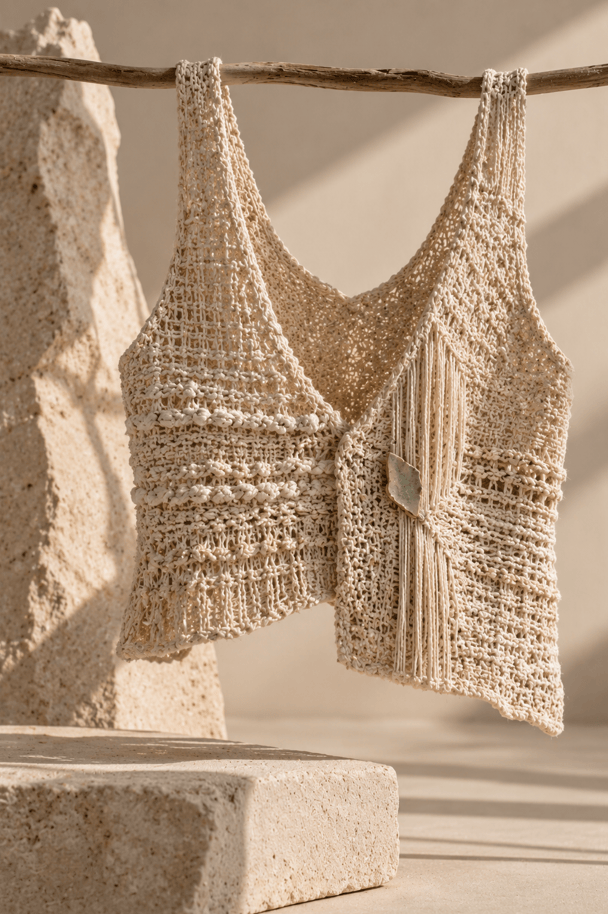
EDITORIAL / 02
THE INTELLIGENCE OF THE HAND
On making, irregularity and the trace of the hand.
PENTHESILEA — MONTEVIDEO, URUGUAY

In every piece, the hand leaves a trace — a gesture, an irregularity, a decision that cannot be repeated exactly.
There is a particular kind of knowledge that exists in making.
It is learned through repetition, but it does not depend on repetition alone. It develops through touch: understanding how far a material can bend, how a surface responds to pressure, when a form needs to be corrected and when an irregularity should remain.
At PENTHESILEA, the hand is not simply a means of production.
It is part of the design process.
IRREGULARITY AS LANGUAGE
Handmade objects are sometimes valued because no two are exactly alike.
But difference alone is not the point.
Irregularity can become a language.
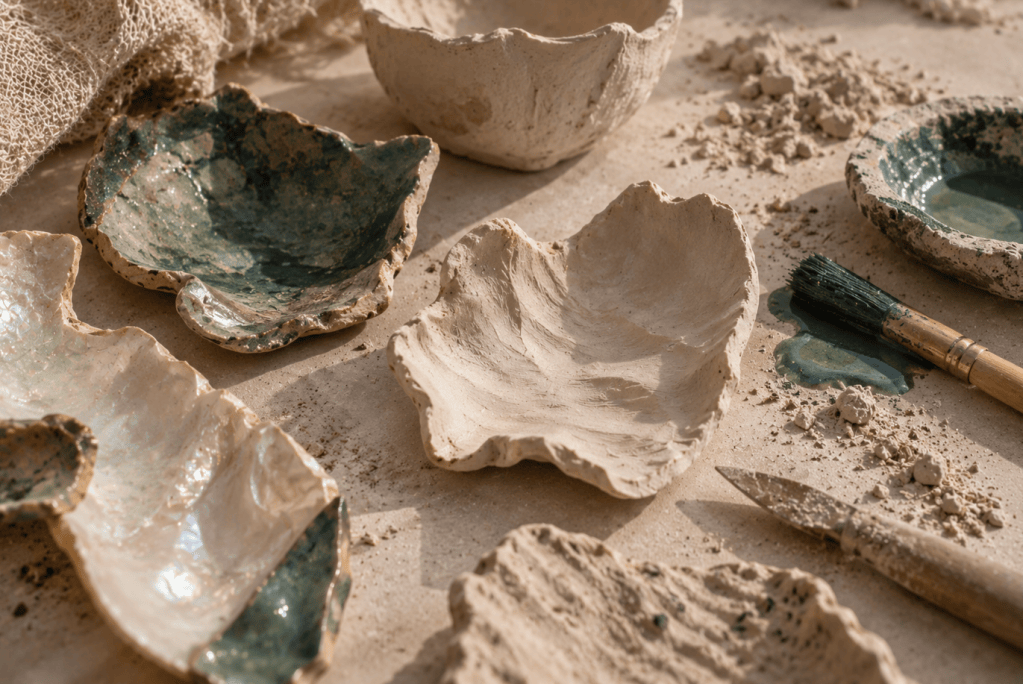
A ceramic surface may retain the evidence of pressure. Natural stones refuse perfect repetition. Pearls vary in proportion and reflection. Fibers react differently according to tension and structure.
Instead of forcing these materials into absolute uniformity, the process allows some of their individual character to remain visible.
The result is not imperfection for its own sake.
It is controlled variation.
THINKING THROUGH MAKING
Drawing may establish an initial direction, but materials often change it.
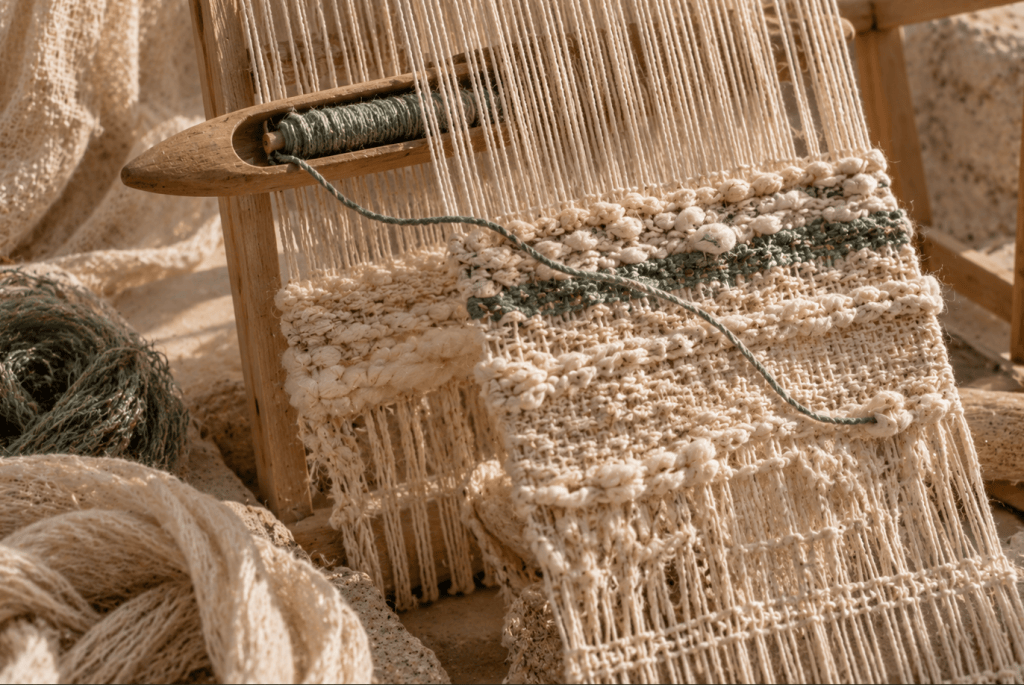
A stone can alter a composition because of its weight. A ceramic element may emerge differently after firing. A woven structure can reveal a proportion that did not exist on paper.
Making therefore becomes a form of thinking.
The object moves continually between intention and response.
The hand observes, adjusts and decides.
THE TRACE
Industrial repetition can remove almost every sign of the person who made an object.
Handcraft leaves something different behind.
Sometimes it is visible in a surface. Sometimes in an asymmetry. Sometimes it is impossible to locate precisely, yet the object retains a sense that it has passed through a sequence of human decisions.
The trace is quiet.
But it is precisely what allows an object to remain individual.