EDITORIAL / 03
WEARING THE LANDSCAPE
The body as a place for material, movement and memory.
PENTHESILEA — MONTEVIDEO, URUGUAY
Landscape is not reproduced.
It is carried —
through color,
texture and form.
An object changes when it meets the body.
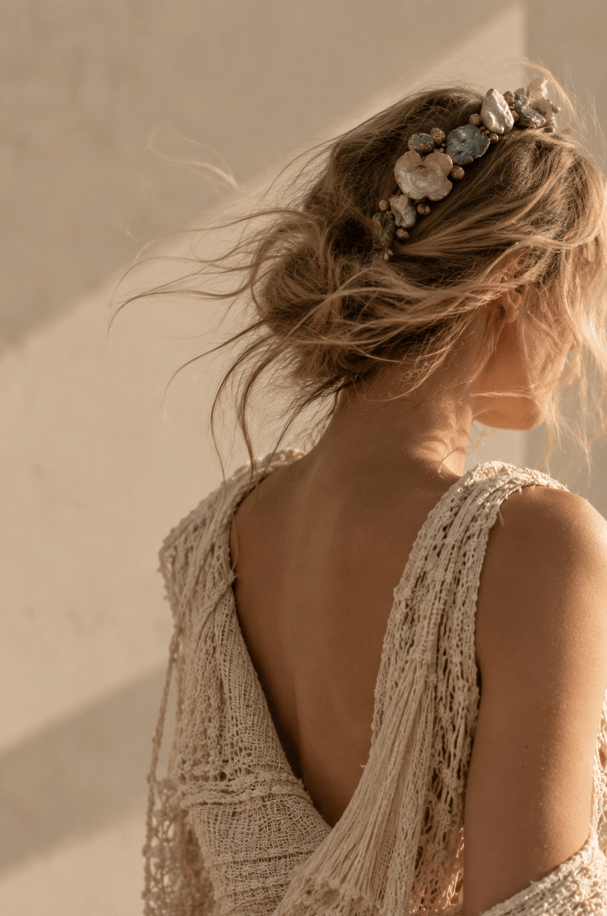
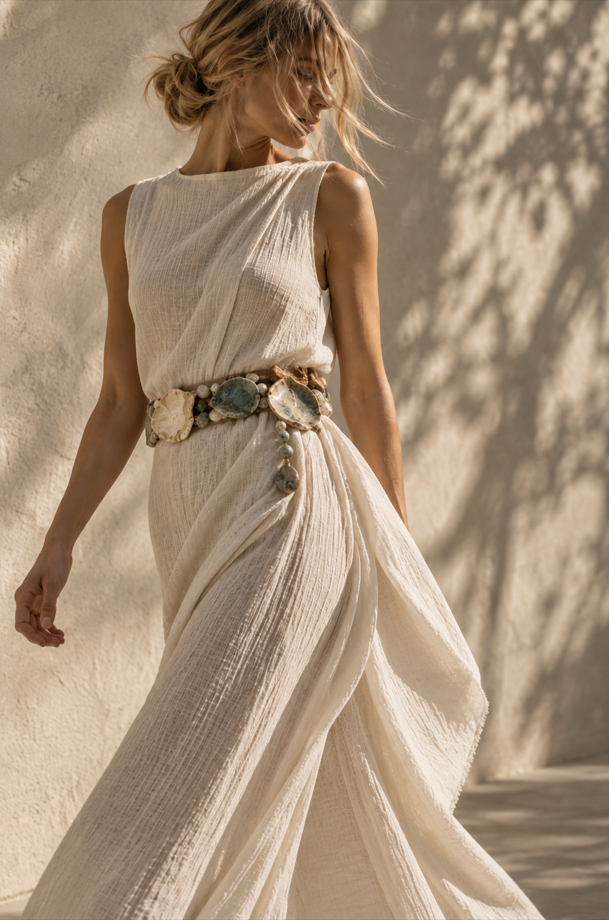
A necklace that appears static on a table begins to respond to breathing and movement. A belt changes the architecture of a garment. A textile shifts with every step. A headpiece alters not only a silhouette, but the space surrounding it.
For PENTHESILEA, this relationship is fundamental.
The object is never completely finished until it enters into dialogue with the body.
Jewelry and clothing are often considered separately.
One decorates the body; the other covers it.
But the boundary can be much less precise.
A belt can become a sculptural object. Ceramic can behave almost like textile when articulated through multiple elements. A woven surface can frame a piece of jewelry. A headpiece can extend the body’s architecture.
Scale, weight and movement begin to connect these categories.
This is why PENTHESILEA moves between jewelry, textile and object rather than treating them as isolated disciplines.
The landscapes behind the collections are not intended as costumes of place.
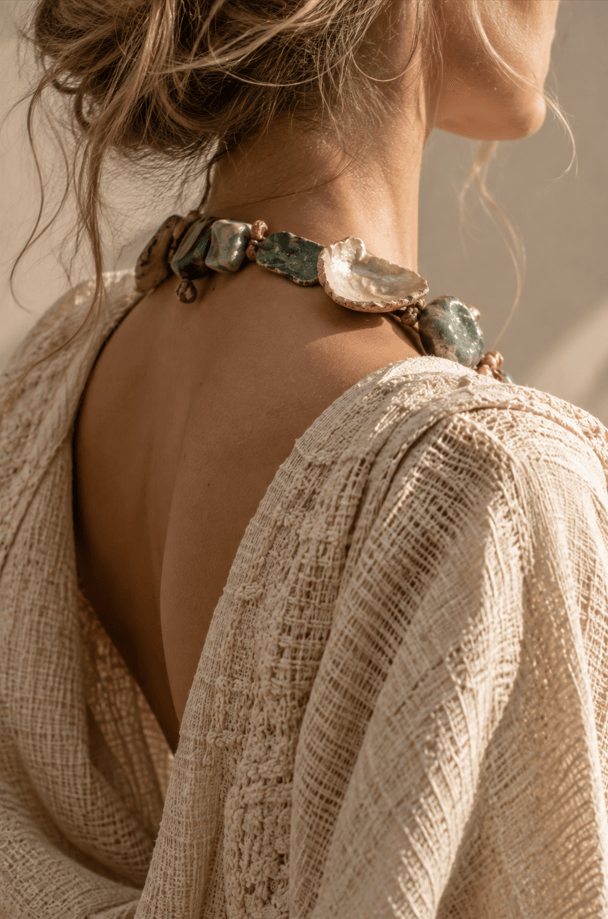
Wearing blue does not mean wearing the Atlantic. Green does not reproduce a wetland. Pearl does not attempt to imitate water.
Instead, landscape enters through abstraction.
A mineral color.
A rough surface beside a delicate one.
The movement of fibers.
The asymmetry of natural stone.
Light reflected by nacre.
When these elements meet the body, landscape becomes something intimate rather than descriptive.
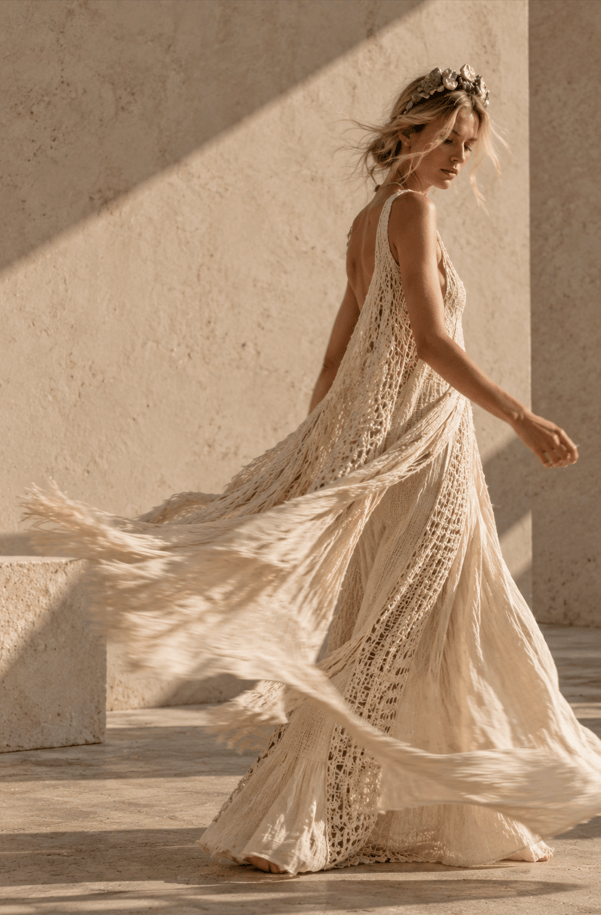
The body introduces one element that cannot be fully designed in advance: movement.
Objects shift. Textiles fold. Light changes across surfaces.
The same piece can therefore produce different compositions depending on who wears it and how they move.
Neither landscape nor body is completely still.
And the object exists somewhere between them.